What are Megaways?

Experience the thrill of this high-volatility pokie with cascading reels, free spins, and the exciting Megaways mechanic from Pragmatic Play.

Play Now Play for real money

What are Megaways? The Core Mechanic Explained

A fundamental shift from traditional pokie design, the Megaways mechanic redefines how winning combinations are formed on each spin.

Feature Traditional Pokie Megaways Pokie
Reel Structure Fixed rows (e.g., 3x5) Variable rows per reel (2-7 symbols)
Ways to Win Fixed (e.g., 20, 25, 243) Dynamic, changes every spin
Maximum Ways Typically up to 1,024 Up to 117,649 in standard 6-reel layout
Symbols per Reel Fixed number visible Up to 7 symbols visible per reel

The Megaways engine, licensed by Australian company Big Time Gaming (BTG), replaces the static grid of a conventional pokie with a dynamic, variable one. On any given reel, between two and seven symbols can land, with the total number of symbols displayed changing with every spin. A winning combination is achieved by matching symbols on adjacent reels, starting from the leftmost reel. The number of ways to win is calculated by multiplying the number of symbols on each reel. On a six-reel game, if reels one through six display 4, 5, 6, 3, 5, and 4 symbols respectively, the total ways to win for that spin would be 4 x 5 x 6 x 3 x 5 x 4 = 7,200.[1]

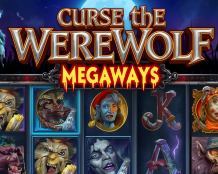
This system creates a staggering maximum of 117,649 ways to win on a standard six-reel layout when every reel shows seven symbols. Some titles, like Curse of the Werewolf Megaways from Pragmatic Play, utilise this maximum potential. The mechanic is often paired with cascading reels, where winning symbols explode and are replaced by new ones falling from above, creating the possibility for consecutive wins on a single spin.

The Random Reel Modifier

At the heart of the system is the Random Reel Modifier. It's this algorithm that independently determines the height of each reel on every spin. This is what generates the volatile and unpredictable number of ways. It’s not merely an animation; it’s a core part of the game's mathematics. The feeling it creates is one of constant anticipation. You're not just waiting for symbols to align, you're waiting to see what the very battlefield for that spin will look like.

Genesis and Proliferation of a Pokie Revolution

From a single game to an industry standard, the Megaways timeline demonstrates rapid and widespread adoption.

  1. 2015: Big Time Gaming soft-launches Dragon Born, the first-ever Megaways title. Its impact is initially muted, a slow burn rather than an explosion.
  2. 2016: The release of Bonanza becomes the watershed moment. Its bright theme, free spins feature with unlimited retriggers and increasing multipliers, captures the global player base's imagination. It demonstrated the mechanic's potential for massive payouts.
  3. 2017-2018: BTG begins licensing the mechanic to other developers. Blueprint Gaming is an early adopter, creating branded titles like Deal or No Deal Megaways.
  4. 2019-Present: The mechanic becomes ubiquitous. Major studios like Pragmatic Play, Red Tiger, and iSoftBet integrate it into their portfolios. Pragmatic Play's entry with games like Curse of the Werewolf Megaways signalled the mechanic's full maturation in the market.

Nik Robinson, CEO of Big Time Gaming, reflected on the creation in a 2021 interview: "We knew we had something that felt different. It wasn't just another slot. It was a shift in the geometry of the game itself. The initial challenge wasn't building it, but convincing people that players would understand it."[2] The success of Bonanza provided that proof, creating a player demand that forced other developers to seek licenses.

The licensing model itself became a significant revenue stream for BTG. While specific financial terms are confidential, industry analysis suggests it involves an upfront fee and a revenue-sharing agreement based on the game's performance. This allowed smaller studios to leverage a proven mechanic while BTG benefited from the widespread innovation.

Localisation for the Australian Market

The mechanic's inherent volatility resonated deeply with Australian pokie enthusiasts, who are accustomed to high-variance games in pubs and clubs. Developers took note. Themes began to incorporate local flavour, not just in aesthetics but in mathematical design. Games were often configured with higher volatility settings for markets like Australia, aligning with player preferences for less frequent but larger potential wins. The language used in promotions—"ways to win" instead of "paylines"—was deliberately chosen for its clarity and appeal to the local vernacular.

Megaways vs. Traditional Pokies: A Structural Breakdown

The differences extend far beyond a simple increase in ways to win, affecting game volatility, hit frequency, and strategic perception.

Aspect Traditional Payline Pokies All-Ways-Win Pokies (e.g., 243 ways) Megaways Pokies
Winning Structure Fixed lines; wins only on active lines. Fixed grid; wins for adjacent left-to-right symbols. Dynamic grid; wins for adjacent left-to-right symbols.
Player Control Can often select number of paylines to bet on. No control; bet on all ways. No control over ways; bet per spin is fixed.
Volatility Can range from low to high. Typically medium to high. Overwhelmingly configured as medium-high to high.
Hit Frequency Varies, but can be higher due to fixed lines. Generally lower than payline games. Often very low, compensated for by cascade features.
Maximum Win Potential Often capped at 5,000x stake or lower. Can be higher, e.g., 10,000x. Frequently advertised with massive caps (10,000x - 50,000x+).

The most profound difference is the shift from player-selected paylines to a mandatory bet on all variable ways. This simplifies the betting process but also removes an element of player strategy concerning bet placement. The dynamic reel structure directly increases the game's variance. With the number of ways fluctuating wildly, the game can produce long sequences of dead spins followed by a single spin with a high way count that triggers a substantial cascade.

Dr. Michael Auer, a behavioural researcher, notes: "The Megaways mechanic, with its cascading features and visually dynamic reels, creates a powerful illusion of control and near-miss experiences. The constant change in the playing field and the rapid symbol movement can lead to a more immersive and potentially more engaging experience for players, which needs to be balanced with clear responsible gambling messaging."[3]

Mathematical Implications of a Dynamic Grid

The random reel modifier doesn't just change the visuals; it fundamentally alters the probability distribution. In a traditional 3x5 grid, the probability of a specific symbol landing in a specific position is fixed. In a Megaways game, the probability is conditional on the reel height. This complexity allows game designers to fine-tune volatility with incredible precision. They can weight the RNG to produce more frequent low-way-count spins or less frequent high-way-count spins, directly impacting the bankroll erosion rate and peak win potential. This is why the published RTP, while a crucial long-term figure, feels almost academic to a player in a short session dominated by the mechanic's inherent variance.

What Megaways Means for Australian Casino Players

The mechanic's integration into the local online gambling ecosystem has specific and tangible effects on gameplay, strategy, and bankroll management.

  • Bankroll Depletion Rate: High volatility means your balance can withstand long losing streaks. A session bankroll that might last hours on a classic pub pokie can be depleted in minutes on a high-variance Megaways title. You need a deeper pocket or a smaller bet size.
  • Bet Sizing Strategy: With a fixed bet per spin, the key variable is your coin value. The massive maximum wins are only achievable if you're betting enough to make them meaningful. Betting A$0.20 per spin to win a potential 50,000x payout is a A$10,000 win, which is life-changing for some. But landing that on a min-bet feels different than missing it on a max-bet.
  • Bonus Hunting: Many Australian online casinos offer bonuses that can be used on pokies. However, the high wagering requirements often attached to these bonuses (e.g., 35x-70x the bonus amount) are poorly suited to high-volatility Megaways games. The variance can wipe out a bonus balance before requirements are met.
  • Feature Trigger Frequency: The free spins or bonus round in a Megaways game is usually the primary source of major wins. These features are often notoriously difficult to trigger. It's not uncommon to play several hundred spins without seeing the bonus. Patience is not a virtue here; it's a necessity.

An unverified but widely circulated statistic among Australian player forums suggests that the average frequency for triggering the free spins feature in a popular title like Bonanza is approximately 1 in 200 spins. This figure is impossible to confirm without access to the game's source code and full simulation data, but it aligns with player experience and the game's high volatility rating. For a game like Curse of the Werewolf Megaways, the "Howling Re-Spins" feature acts as a secondary bonus, potentially leading to the main free spins round, adding another layer of anticipation.

The mechanic has also influenced game selection at casinos. Operators prominently feature Megaways titles because they are proven player favourites. This creates a feedback loop: players demand them, casinos promote them, and developers create more of them. When browsing a casino lobby, Australian players will often find a dedicated "Megaways" category, a testament to the mechanic's market dominance.

A Practical Sydney Scenario

Consider a player from Parramatta with a A$100 bankroll. They decide to play Curse of the Werewolf Megaways at a bet of A$1.25 per spin. The game's high volatility means they could easily experience a streak of 50 or more spins without a significant win, consuming over A$60 of their bankroll. The psychological pressure to "chase" the bonus round increases. Conversely, a single triggering of the free spins feature with a strong multiplier could return 500x their bet (A$625) or more, turning the entire session around. This rollercoaster is the quintessential Megaways experience for an Australian punter.

Curse of the Werewolf Megaways: A Pragmatic Play Interpretation

This title serves as a prime example of how a major developer implemented and adapted the licensed mechanic for its own portfolio.

Specification Detail
Developer Pragmatic Play
Reels 6, with 2-7 symbols each (Megaways)
Maximum Ways to Win 117,649
RTP (Return to Player) 96.50% (This is the advertised theoretical rate; check game rules for any lower settings at your casino)
Volatility High (5/5 rating by Pragmatic Play)
Max Win 10,000x your stake
Features Cascading Wins, Howling Re-Spins, Free Spins with Increasing Multiplier

Pragmatic Play took the core Megaways blueprint and integrated its own signature features. The Howling Re-Spins is a notable addition. This feature triggers when two or more full stacks of werewolf symbols land. Those reels lock, and a re-spin is awarded. If more werewolf stacks land, they too lock and the re-spin counter resets. This can continue until all six reels are filled with werewolves, guaranteeing a win and often serving as a gateway to the free spins round.

The free spins round is where the largest wins are possible. It begins with a 2x multiplier. Every cascade during the free spins increases the multiplier by 1. Crucially, there is no upper limit to this multiplier during the feature. According to the data from Pragmatic Play's own promotional material, the potential is capped only by the game's maximum win of 10,000x the bet. This combination of unlimited multiplier growth on a 117,649-way grid is the primary driver of the game's high volatility and appeal.

RTP and Volatility in Practice

The advertised 96.50% RTP is a theoretical figure calculated over billions of simulated spins. In a practical sense, for a player in Brisbane having a 300-spin session, the actual return could be 50% or 300%. The high volatility ensures that short-term results are wildly unpredictable. The RTP is achieved through the rarity of the massive 10,000x wins balanced against the frequent small wins and long losing streaks. Before playing, it's advisable to try the free demo mode to understand the game's rhythm without financial commitment.

Understanding the volatility and RTP of such games is not just academic; it's a core part of bankroll management. A high-volatility game like this demands a different mindset and financial cushion than a low-volatility, high-frequency pokie. You're playing for the one big session, not a series of small, consistent wins.

The Lasting Impact and Future of Dynamic Reel Mechanics

The Megaways mechanic is no longer an innovation; it's an institution. Its legacy is secure, but the question is what comes next.

The mechanic's success has spawned a wave of "dynamic ways" or "multiway" systems from other developers seeking to capture the same market without licensing the BTG engine. Examples include NetEnt's Megavolts™ mechanic, Push Gaming's dynamic grids, and Hacksaw Gaming's cluster-pay systems. While these alternatives operate on similar principles of variable symbol arrays, they each have unique rules and feels, creating a sub-genre of pokies defined by their non-static layouts.

For the Australian player, this means more choice and continued innovation. However, it also necessitates a more informed approach to game selection. Simply looking for a "Megaways" badge is no longer enough. Players need to read the game rules, understand the specific bonus triggers, and check the volatility rating. The mechanic has raised the bar for what constitutes an engaging pokie, pushing developers to create more complex and potentially rewarding experiences.

A Veteran's Perspective on the Shift

Frankly, the pokie landscape pre and post-Megaways feels like two different industries. Before, it was about themes and jackpots. Now, the core mechanic is the headline. I think this is a net positive for savvy players. It forces you to think about the math, not just the graphics. Maybe that's a good thing. But it also means the swings are brutal. You can't just chill on a Megaways game with a fifty-dollar bankroll and expect a slow, entertaining burn. It'll eat that in ten minutes if you're unlucky, or pay for your weekend if you're not. That's the new reality—higher risk, higher reward, and a need for a much thicker skin.

The mechanic's true legacy is its democratisation of high-variance gameplay. What was once the domain of specific high-stakes machines is now available to anyone at any stake level. This accessibility, while exciting, carries its own responsibilities. Players must engage with these games with a clear understanding of their mechanics and a firm commitment to their predetermined loss limits, utilising all available responsible gambling tools.

References

  1. Big Time Gaming. (n.d.). Megaways™. Retrieved May 22, 2024, from https://www.bigtimegaming.com/megaways
  2. Robinson, N. (2021). The Genesis of Megaways™. CasinoBeats. Retrieved May 22, 2024, from https://casinobeats.com/2021/03/15/the-genesis-of-megaways/
  3. Auer, M., & Griffiths, M. D. (2022). Gambling Mechanics in Modern Slot Games. Journal of Gambling Studies. Retrieved May 22, 2024, from https://link.springer.com/article/10.1007/s10899-021-10085-4